
The Space Between Us, Pt.2
Our Three Dimensions

This article best viewed on your largest display screen. Email subscribers, it may be truncated. Use the “read in app” to view on Substack for enhanced experience.
The various spaces we inhabit can be chaotic at times. Public spaces mostly. Just the way life is on this small planet of approximately 2.5 million different species.
It’s unlikely every one of us considers our three dimensional world (length, height, width) upon walking out of our homes, into that public realm. The words most likely used to describe a prevailing thought, “I don’t like crowds.” Too many people, ugh! That personal loss of freedom and control can be angst ridden. It’s a means to an end, it has to be done to achieve the goal.
↑ Scenes like the ones in this video are what made me embrace the idea of documenting crowds as a participant, and not fear them. As participants in human societies, we primarily relate with each other. My guess, as individuals—rarely interacting with the other 2.5 million species. Excluding house pets, and visits to aquariums and zoos.
A Spectator’s Space
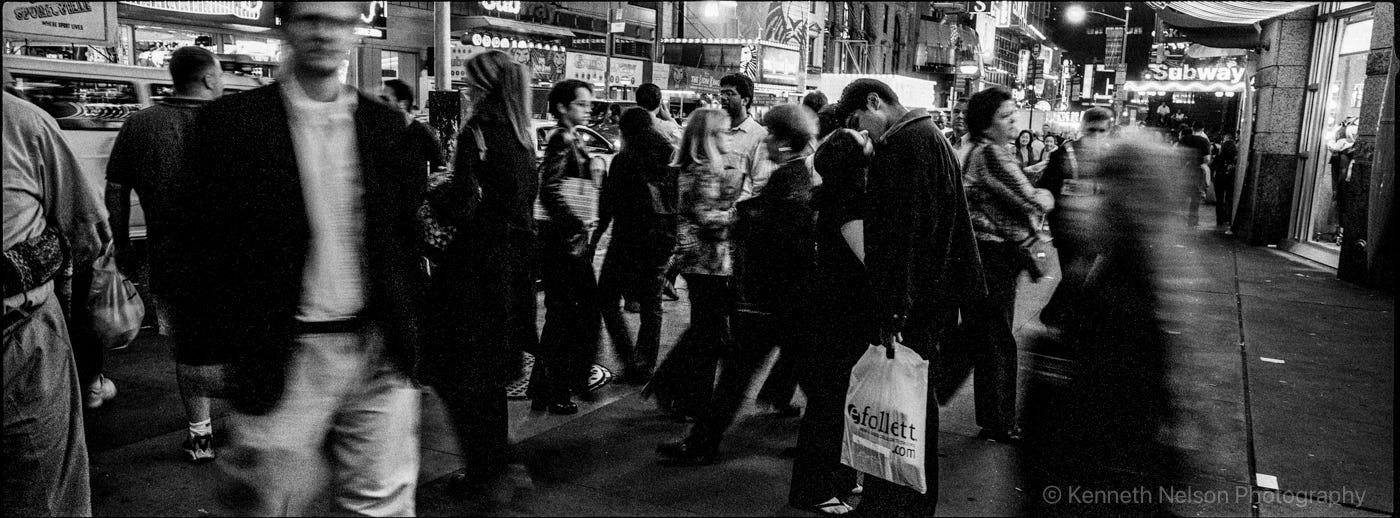
These panoramas provide an extensive view not typical of square or rectangular formats
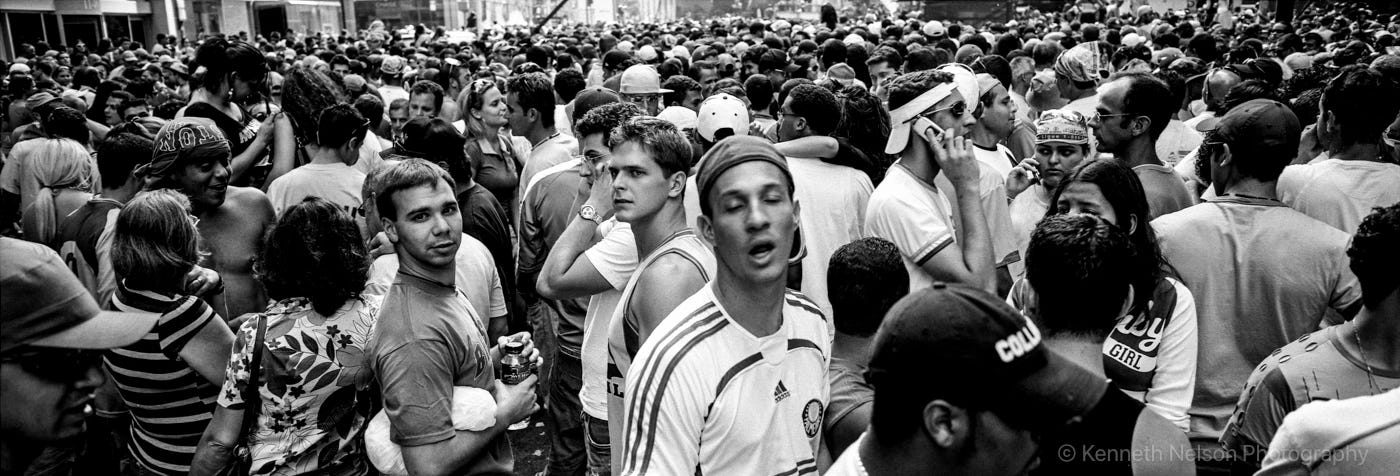
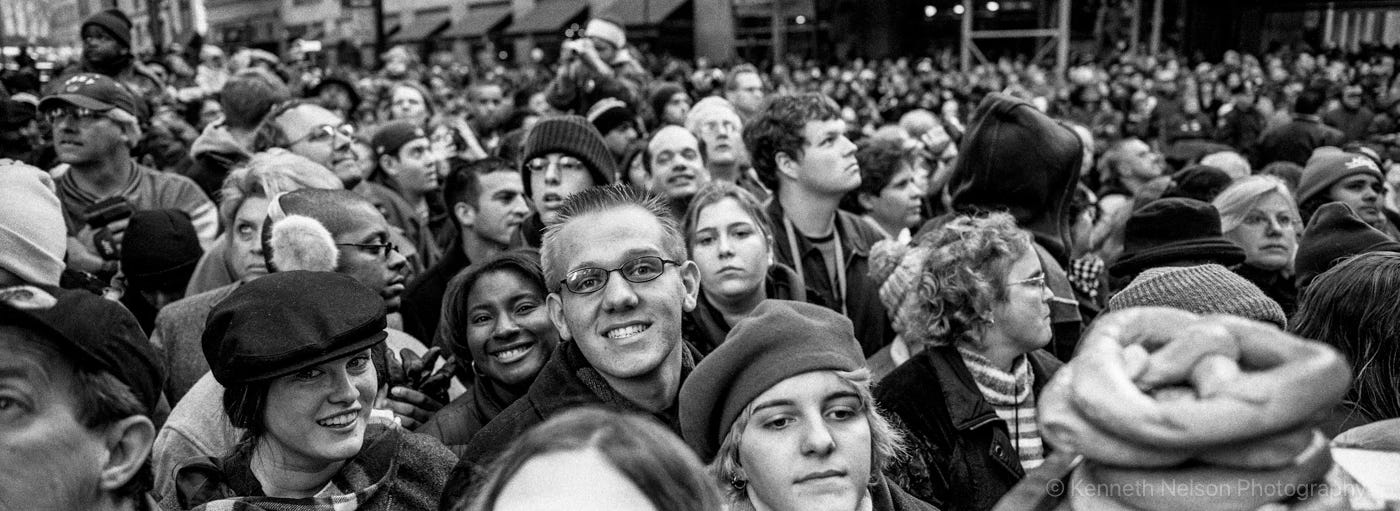
↑ We adjust to the anxieties of crowded spaces as spectators. Standing being more arduous than sitting. Seated, your space is the size of the seat and arm rest (if any). Standing, your space is determined by the person next to you and their notion of personal space.
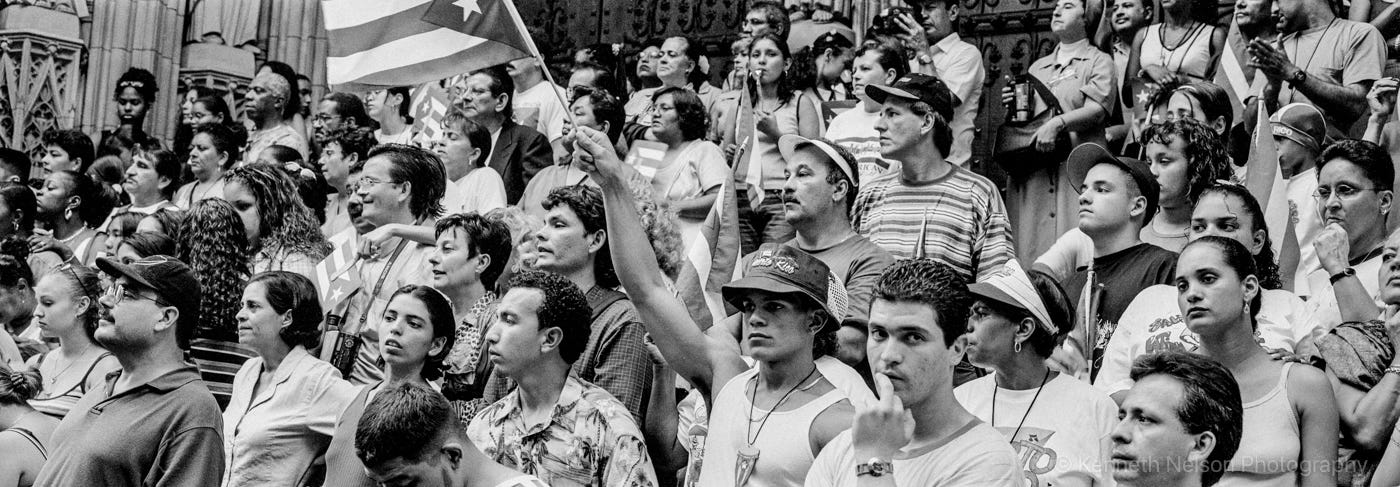
Our course, scenes like these are quite rare given the world population and habitable land on the planet. These flocks of crowds occur in certain cities, particularly during midday. They don’t happen 24/7, though our minds may trick us into believing they do. Think about it this way, every scene depicted in these photographs wasn’t like it an hour prior.
A Gazer’s Space
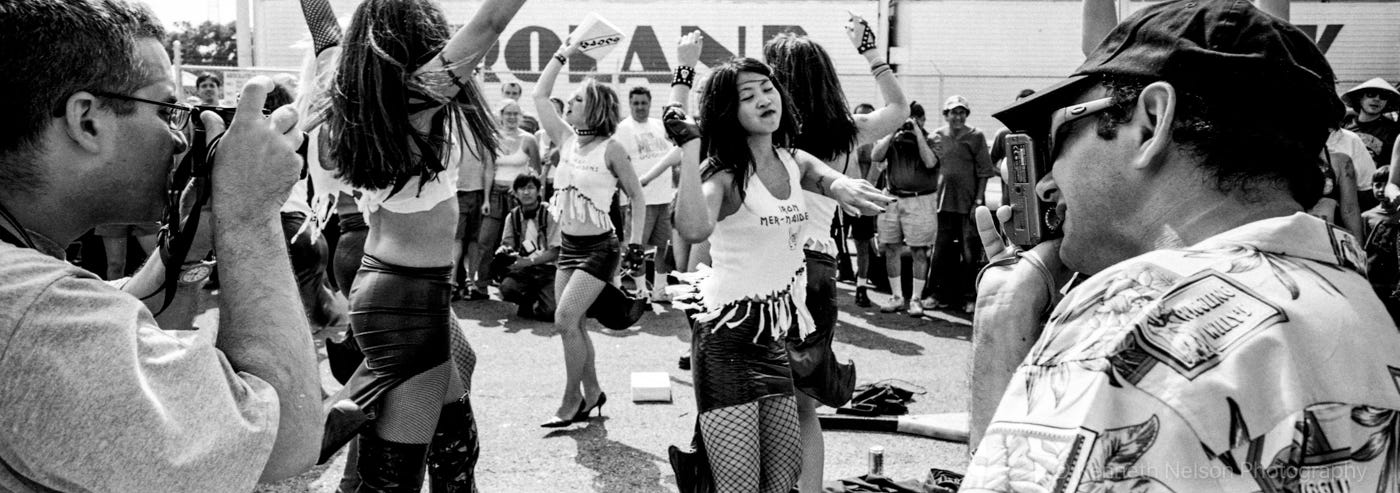
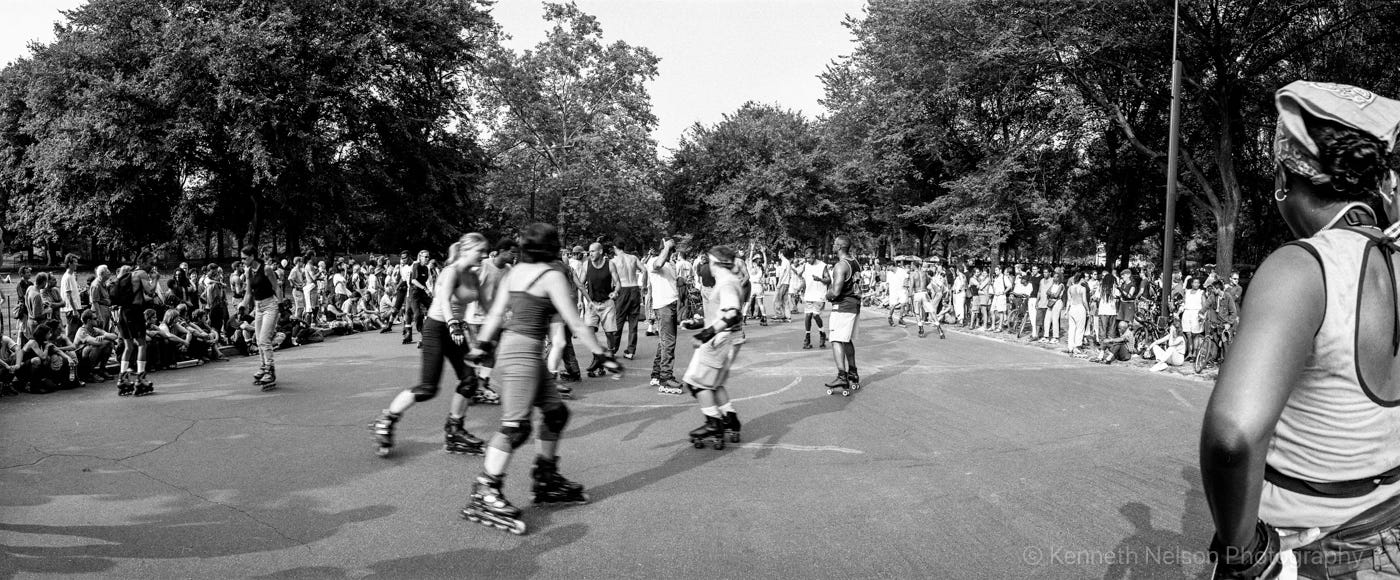
A Dancer’s Space
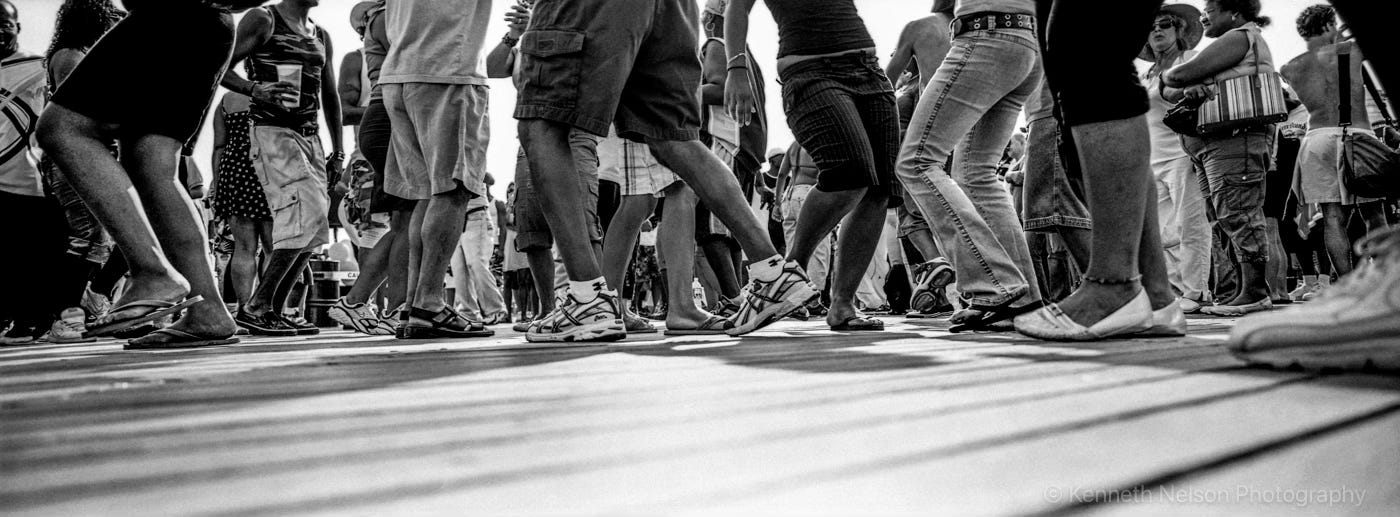
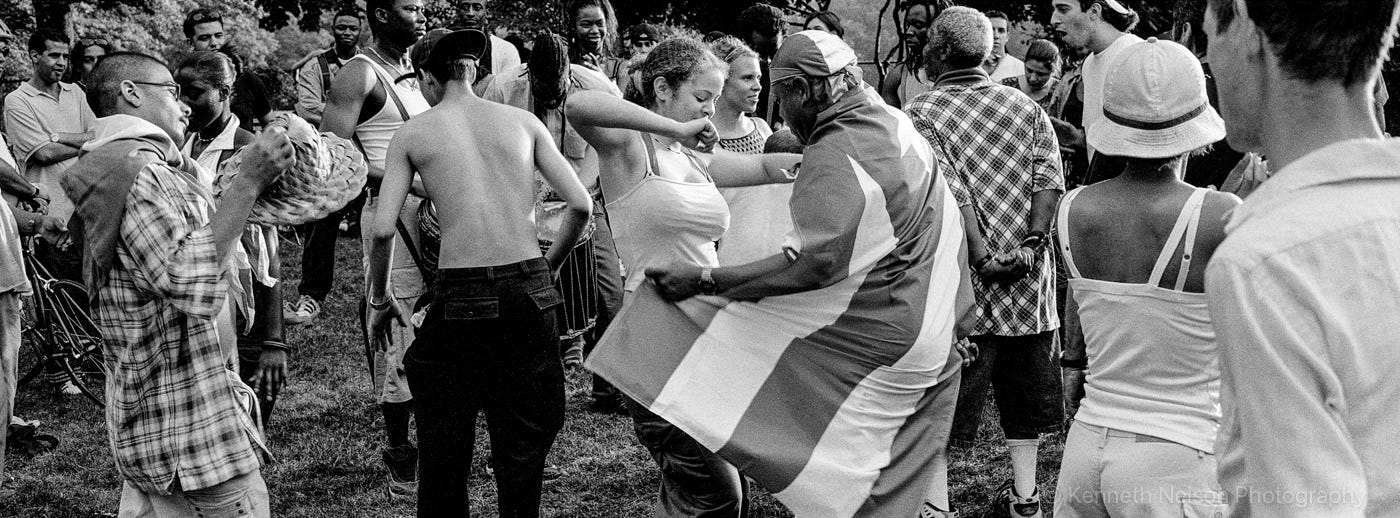
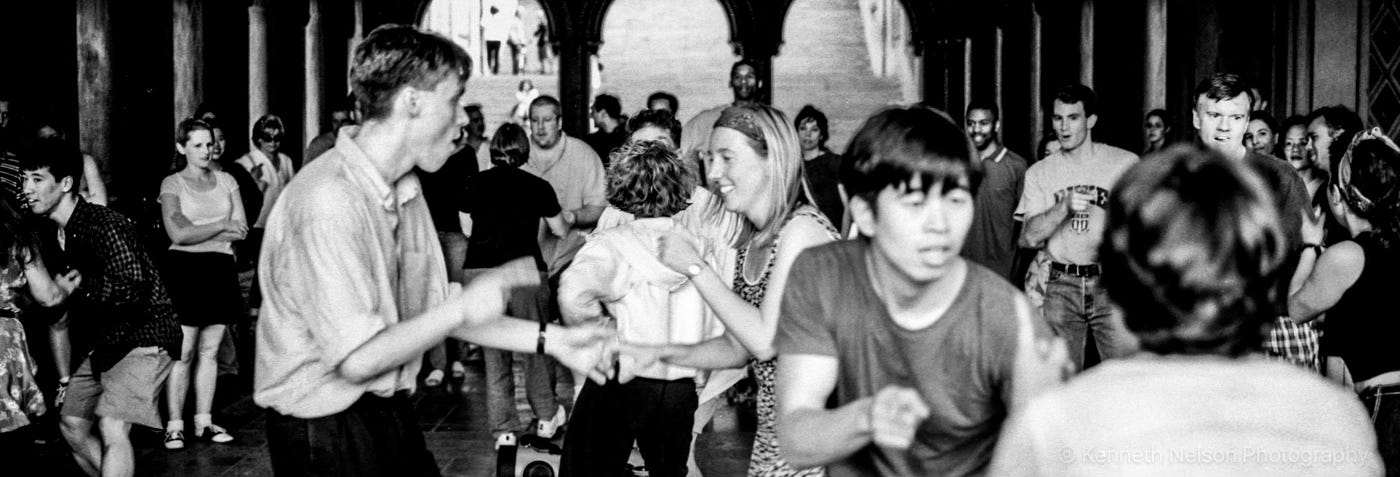
The space to dance is crucial to the heart and soul of many dancers. Space to move freely. The more space for dancing, the more expressive dancing can be.
A Shopper’s Space
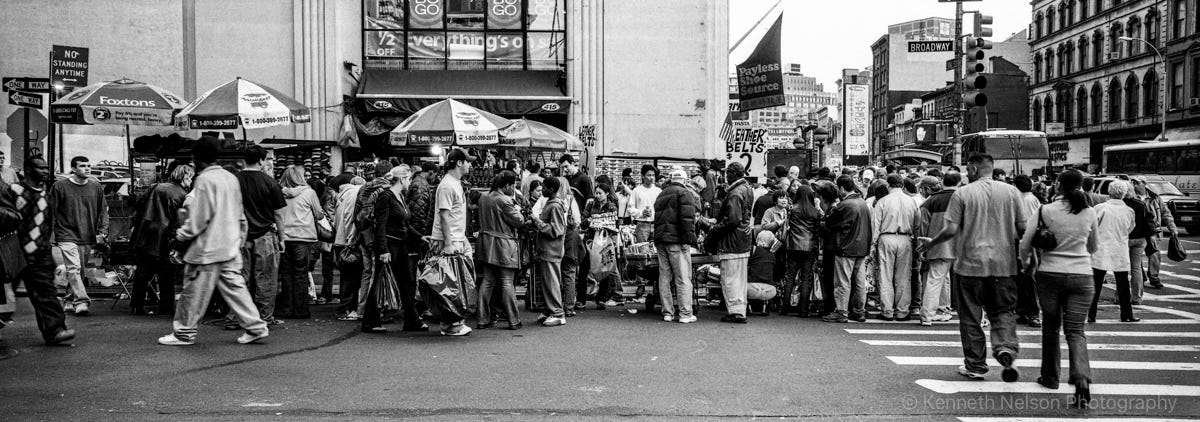
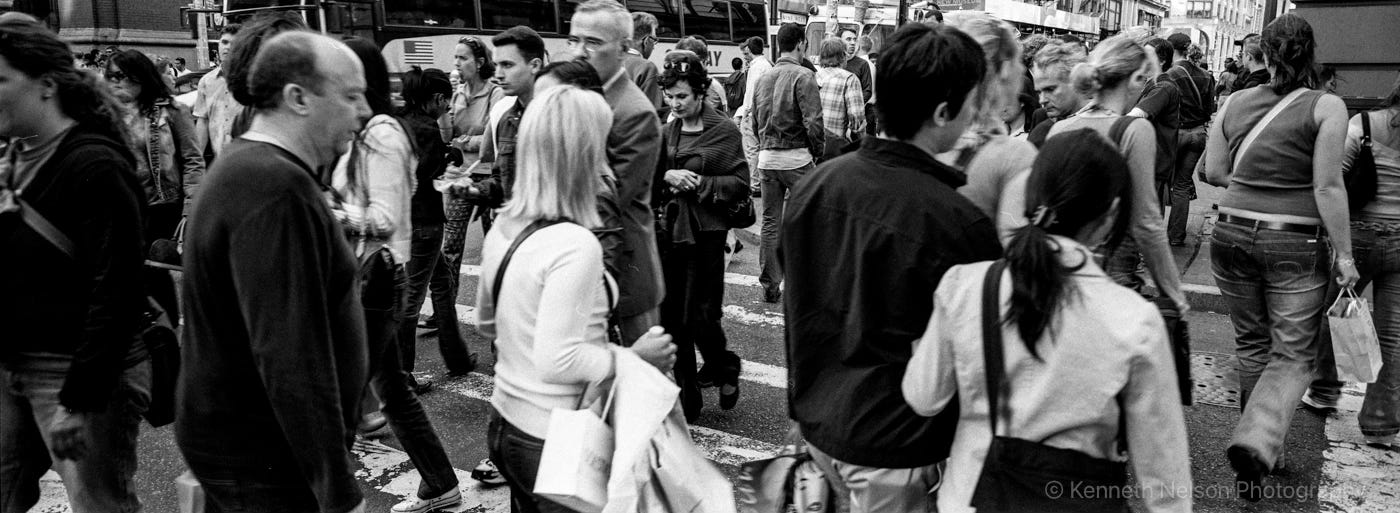
↑ In the early 1990s, SoHo in Manhattan began its transformation from an industrial zone into a multipurpose shopping district with art galleries, restaurants, shops & boutiques. ↓ Though artists had been entrenched in the neighborhood for decades, zoning laws didn’t support residential use of warehouses and manufacturing building until early 1970s. It’s a walking city, so pedestrian accessibility along with the number of stores and restaurants have kept going as a major destination with seamless access by bus and subway.
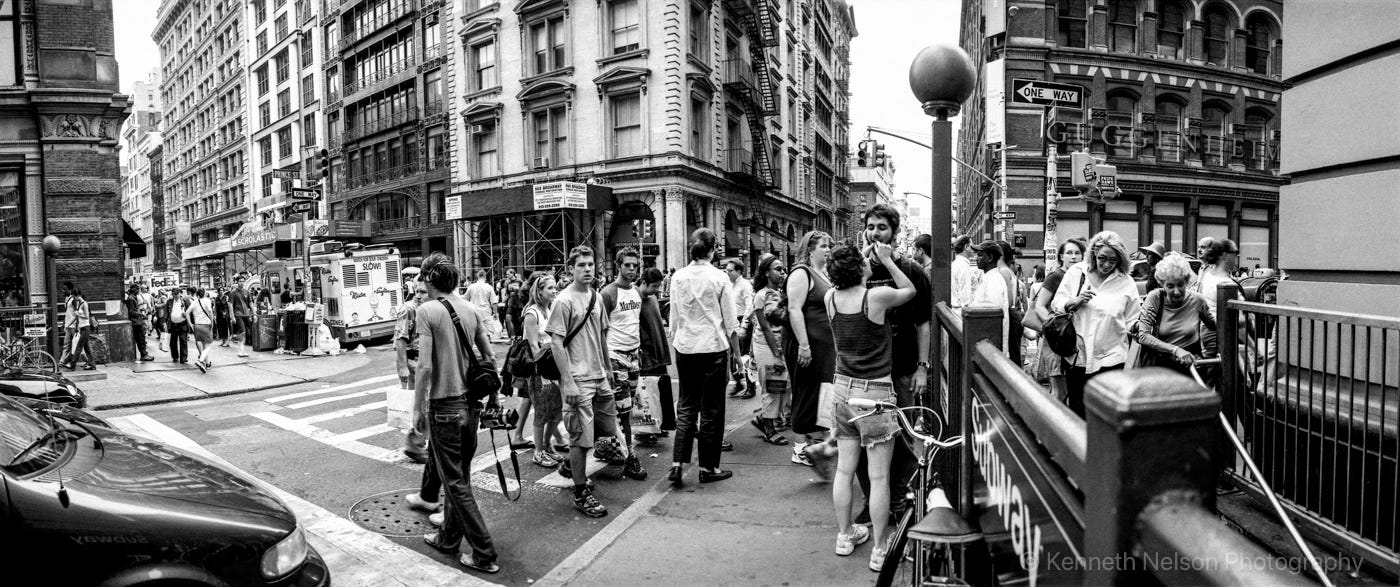
↑ I’ve been fascinated by the neighborhood in all of its transformations since mid 1980s. The four corners of this intersection, and Broadway & Spring Street on the left down the block are my most photographed areas in the city.
Solemn Spaces
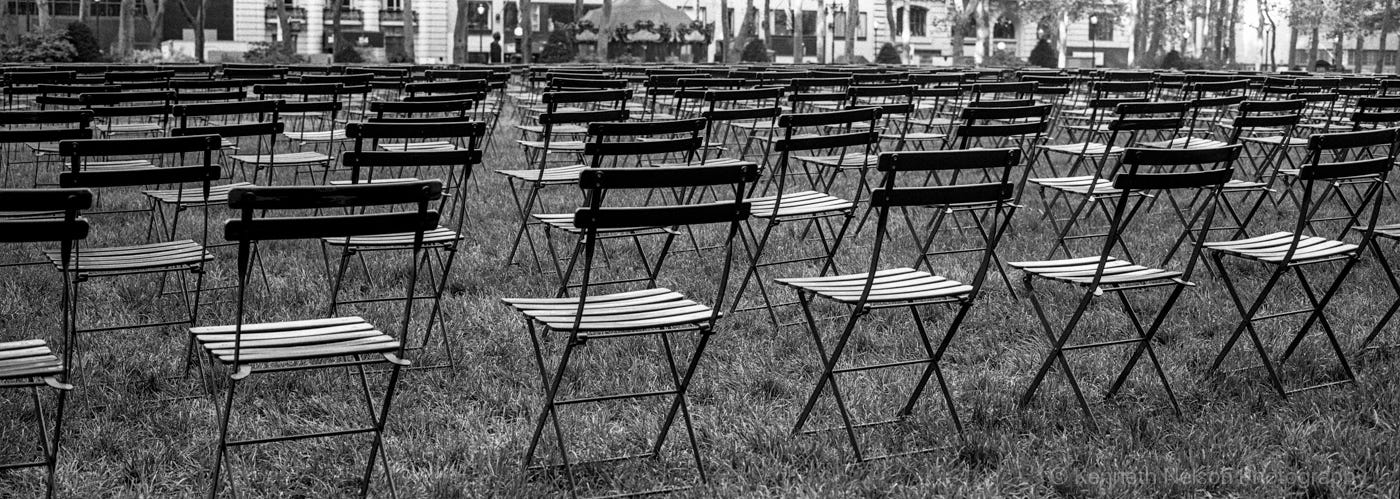
↑ The first anniversary of the September 11th attacks at the World Trade Center site. 2753 chairs on the lawn at Bryant Park, each in honor of someone that died at “Ground Zero.”
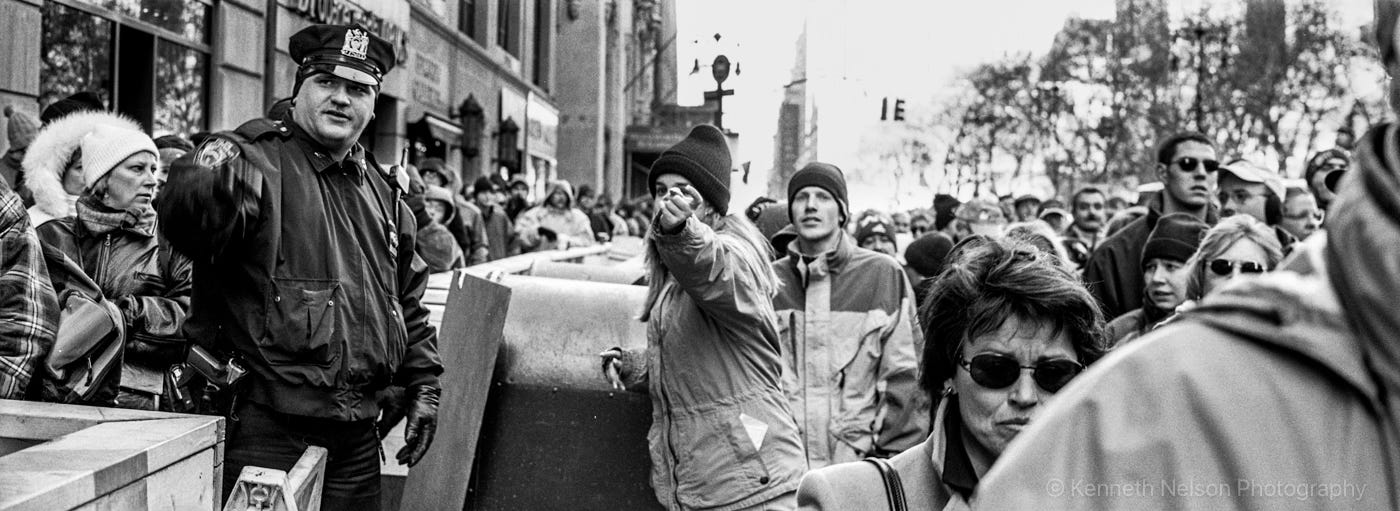
↑ Visitors and tourists to the city were among the mourners waiting on line for access to a viewing platform at the World Trade Center site. ↓
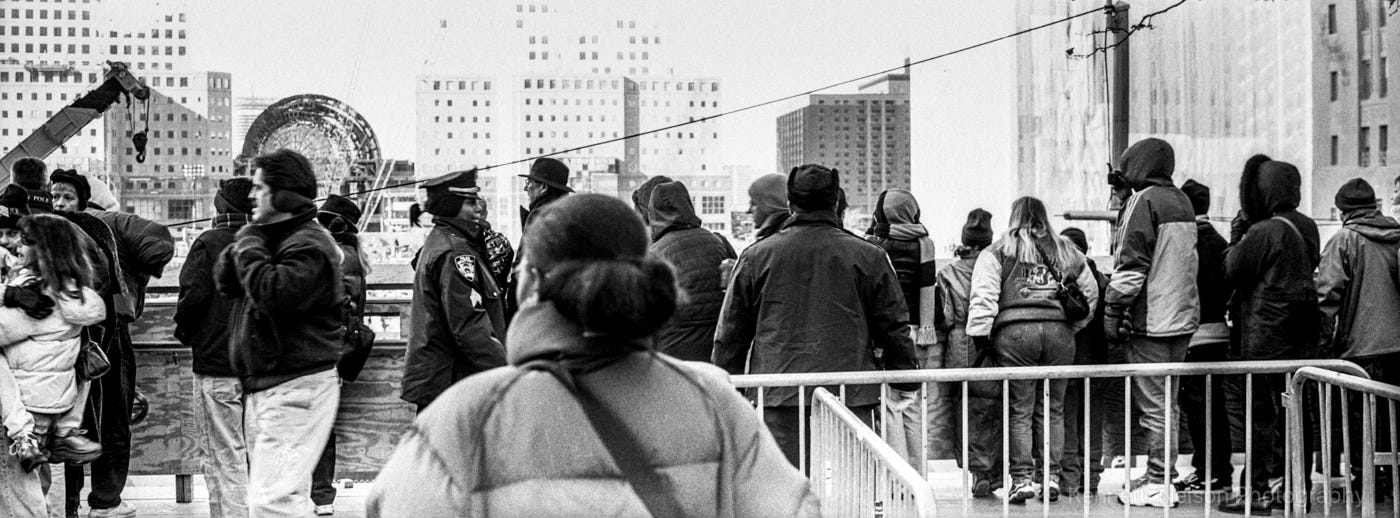
↓ Read about the origin of this series in the first part, published June 2024 ↓
Wishing you well until next time…
Brilliant use of the panoramic crop here, it's so very immersive. Do you know if these photos were made with an X-Pan (or similar) or were they simply cropped after the fact?
Also... I had no idea Substack could present photos so well (esp. on a big screen!).
Celebrating life in its billions of forms, once again